
Choosing the Right Fish Finder
Home » Boating Tips » Choosing the Right Fish Finder
Home » Boating Tips » Choosing the Right Fish Finder
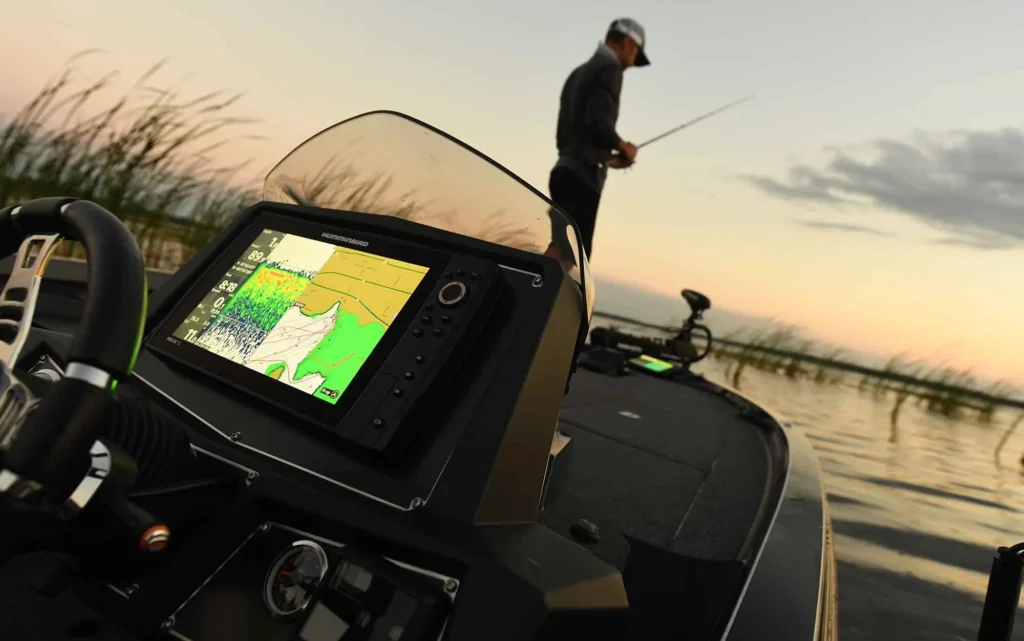
Fishfinders or more recently known as Multi-Function Displays (MFDs), allow anglers to see a graphic representation of what is beneath their boats so they can identify fish.
As technology has advanced in recent years, many MFDs now combine not only the traditional Fishfinder, but also a chart plotter, and wide array of networkable accessories like high powered sonar modules, radars and the WIFI/Bluetooth features of a true smart device.
To choose a Fishfinder, you’ll need to consider the following things:
Ask yourself the following questions.
Do you:
Standalone Fishfinder:
If you just want to see what’s below, dedicated Fishfinders give the biggest display and the best performance for the least cost.
Suitable for:
Combination Fishfinder / Chartplotter:
Combination units are suitable for most owners of small to mid-sized boat. Using GPS and charts to navigate fishing grounds, viewing both charts and sonar in split screen views, or view only the Fishfinder these units provide unrivalled bang for your buck.
Features:
Networked Systems:
Multi-display networked systems are great for medium to large boat for the ultimate in Fishfinding performance from your shallow local reef to the far side of the shelf.
Features:
What Style & Shape?
Thru-Hull
While they can be the most challenging to install, they are likely to provide best signal quality. Displacement power and sailboats generally use thru-hulls. A thru-hull triducer contains depth and temperature sensors, plus a speed paddle wheel.
Transom-Mount
Adjustable-angle bracket is screwed or bolted to transom, with transducer hanging below and behind hull. Simpler installation, but may encounter more turbulent water flow.
In-Hull
Very popular for Jetskis and both in-hull and transom-mount styles are popular for trailer boats. “Shoot through hull” transducers need no direct water contact. They are glued to the inside of the hull with silicone or epoxy. They do not work on cored hulls or steel hulls, only for solid fiberglass.
Trolling Motor
Clamped to the outside or permanently installed inside propeller hub of trolling motor. Sonar Ready trolling motor models include built-in 200kHz transducers that fit many popular fishfinders.
We hope this has provided you with a much clearer picture of what you’re looking for in a Fishfinder.
The team at your local Bating and Outdoors store will be able to guide you to match the available options to your specific need, so give us a call today and we’ll have you finding more fish in no time.
Signup and get the latest deals and information from Boating and Outdoors.